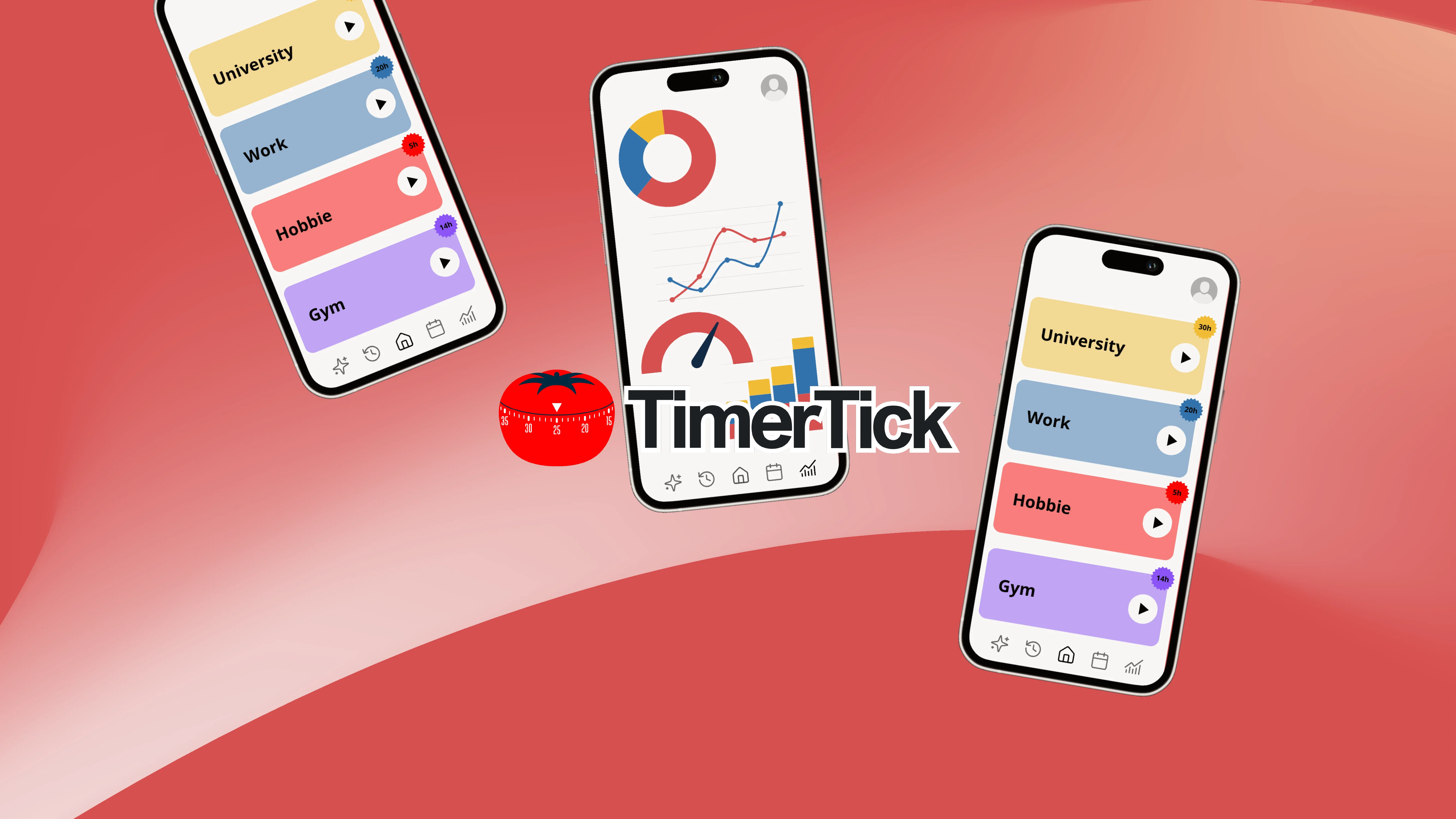
TimerTick
A time tracking and productivity system based on the concept of 'area of focus', that helps you better manage your time.
Links
Why TimerTick?
TimerTick is a time tracker and productivity system based on the concept of ‘areas of focus’. The idea is that you determine what areas are important in your life, and don’t leave to chance the time you dedicate to them.
The problem we want to solve is the lack of awareness on the use of time, and the common problem of postponing not so urgent stuff forever because there’s allways something “more important” that’s on top of the to-do, and then the not so urgent thing ends up not being done at all.
Our solution is TimerTick. Being based on areas of focus, you define time, not tasks, and the app makes sure you don’t leave anything out. We made a teaser showing a little bit of the idea: https://youtu.be/cWcuTd81oes?si=hF3ChUpPmyMGQAzT
Most time trackers are after the fact tracking, you can track what you did and make stats and stuff like that. But that doesn’t help organizing, you still have to balance and plan the different things you want to do outside the system. For TimerTick, the idea is that the app knows what areas you have, what time goals you have for each, and how much of a priority each area is to you. Knowing that, and knowing how much time you spent in each and how much time you have in your calendar, it can give you insights about how you are doing (if you are behind in one area in particular, if you should start working in some area because the week is ending and you didn’t meet the objective, or if you are doing great so you can relax a bit this week).
It also gives you statistics and suggest you to change your goals if they are not realistic or you couldn’t keep up with them for too many weeks, and has built-in tools like pomodoro to make the tracking of time also helpful for your concentration/productivity.
The system is intended to be open source, self-hostable, cross-platform, and really extensible. We want people to be able to add tracked time in the way that’s more comfortable for them, export their data to analize it in the way they wish, and be able to help in the development if there’s a feature they want that’s not yet developed. Also being able to self-host is important if you care about your information, so we will try to make it easy to do so.